
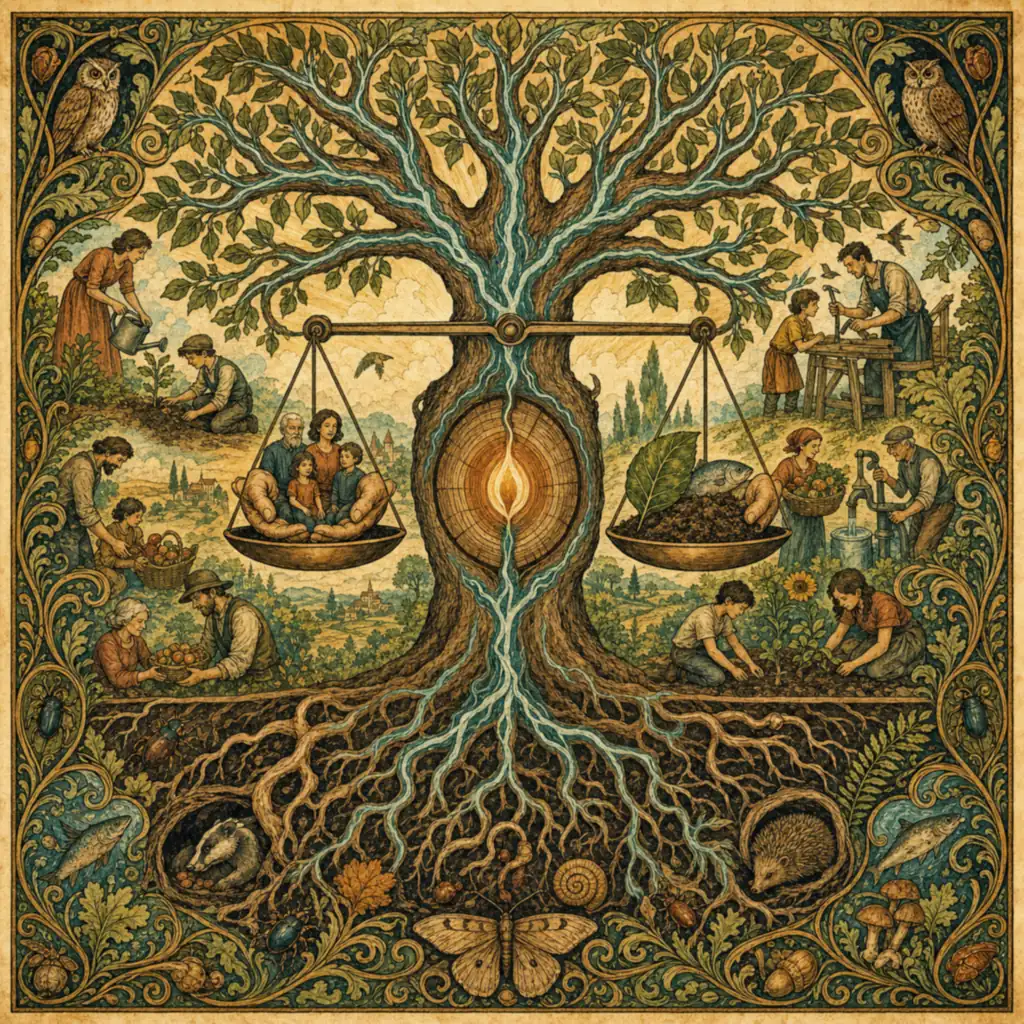
Doing is science
The Blue Economy approach presents its business models in an uncompromising way. It has a clear objective and acts according to transparent principles. While some consider the approach revolutionary, we consider it to be one of the ways to ensure that we succeed in responding to the urgent social and environmental needs of our time, using the best tools that we have, while creating a new generation of entrepreneurs who are dedicated to the Common Good. The philosophy, concepts, methodologies, and tools outlined above are not axioms or laws, but rather emerge from our observation of the initiatives that have been successfully implemented. We learned lessons from initiatives that had not succeeded (as yet) or were much delayed because we had to learn how to design and execute better. These reflections on how The Blue Economy vision has been translated into reality, offer us the understanding of why and how we progressed the way we did, and can serve as inspiration and mentoring for others. We adhere to the German principle that Schaffen ist Wissenschaft (Doing is science).
We reach rather than teach
We (The ZERI Network) have the privilege of receiving continuous input from thousands of scientists who collaborate since the inception of the concept at the United Nations University in 1994, and when one or two confirm new insights and we discover fresh opportunities to improve the systems before us, we are prepared to adapt and transform again. We have a clear pathway forward and nothing will divert us. We only desire to improve, accelerate and spread the options we are discovering. Our approach is not dogmatic, we reach rather than teach, and seek to expose rather than impose. This strategy of continuously exposing people to opportunities, and the successful implementation and continuous improvement, creates conditions to keep ethics at the core.
It is unethical to settle for doing less bad
In simple terms, it is unethical to settle for doing less bad. Stealing less is still stealing; polluting less is still polluting. Mere talk about minimising the negative impact on the environment is not good enough. We cannot celebrate those who reduce pollution, nor can we accept that players in the market knowingly inflict social, economic and environmental damage. Concretely, ethics at the core means that we will not tolerate “more efficient batteries”: we will continue to strive to have no metal batteries at all, since batteries rely on mining, and a dramatic increase in demand for batteries will lead to more mining, and thus put more scars on the face of the Earth, requiring massive energy input based on fossil fuels. This does not mean that we are against storage of energy and power: we just search for methods that free the world of an increased reliance on methods that guzzle fuel, mineral or metal resources indiscriminately.
Making the business models open source
Ethics at the core also implies that we make our business models open source. Since we benefit from the free contributions of thousands on the design of The Blue Economy approaches, we cannot and will not use this for our personal gain. If our goal is to have a fast and profound acceleration of transformative change, then the open source policy must be creatively pursued, without using the traditional shackles that restrict access (such as patents or intellectual property rights). After all, the key is not the technologies themselves, but rather the new business models The Blue Economy approach creates, which are always ready for adaptation to time and place. With respect for the originators of the ideas and the technologies, these models will allow us to steer society away from a fixation on products and processes, towards the design of approaches that are ethical at the core, use what is available, and direct us towards health and happiness.
Awakening the child within each one of us
Finally, ethics at the core implies that we cannot solely focus on the here and now, working only with the wisdom that we have accumulated to date. We have a responsibility to inspire children, and to accept that all our diplomas and degrees have an expiry date. Children have the power to consider fantasy a reality. Children believe that everything is possible. Children know how to dialogue with animals, and strike a conversation with plants. Adults, at home or in the office, continuously try to weed out all creative ideas, classifying something new as something impossible. Others may label a new proposal a vision, one that may be possible, but that will never materialise in the short term. Keeping ethics at the core includes the ability to awaken the child within each one of us, to see what may seem like a fantasy, can quickly become a reality. This is why I personally ensure that successful projects are translated into fables that I do enjoy sharing personally with children all over the world.
The power of keeping ethics at the core lies in deciding on a path in the right direction, and while we may not know exactly where it leads, we faithfully include the best of all, and know that the results will be better than ever before, and certainly better than what we could imagine today, provided we have the patience.