
The Green movement, and the scrutiny of toxicity
The “Green” movement gained momentum in the 70’s and 80’s and highlighted the fact that dependency on petroleum and petrochemicals presented numerous problems, with ecologists urging societies and industry to search for a pathway beyond petroleum. One of the outcomes of this is that products have been increasingly scrutinised as to their toxicity and biodegradability. Chemicals like those used in Teflon (non-stick surfaces used in cookware, for cooking without oil or butter), glyphosate in RoundUp (herbicides that became the standard), and brominated compounds (fire and flame-retardants) are functional. The widespread use of these molecules do, however, have many unintended consequences. The combination of all these engineered chemicals leads to a cocktail with implications we have not yet fully grasped. We know that the ultimate impact on the quality of life is not positive.
Plastics, having a half-life of thousands of years, were rightly identified as incompatible with our consumption patterns and throw-away society, filling landfills all over the world and creating huge islands of plastic debris in the oceans, covering the bottom of the sea with a blanket of tiny particles that risk changing life where it emerged on the planet. How is it possible that a water bottle, one that consists of a container made from poly-ethylene and a cap of poly-propylene, both of which have half lives of hundreds of years, has become a standard on the market, when the functional use of the bottle is only a few weeks long? The drive towards the elimination of toxic compounds and the imposition of biodegradability was logical and widely supported.
The awareness that we needed to go beyond only the absence of toxic compounds, and that we needed to create conditions for sustainable consumption, required becoming conscious of the fact that even when the materials are ‘green’, their sources should not deplete existing stock or go beyond its rate of replacement, causing over-consumption. While both production and consumption should avoid unintended consequences and operate within the means of Nature and society, we now need to do much better and go far beyond these basic and commonly accepted principles.
Soap from palm oil: less bad was not good enough
When manufacturing soap made from palm oil, I at first argued that these products were biodegradable and from a renewable source. Furthermore, these products were manufactured in an ecological factory, constructed from wood, with the (then) largest green roof of any industrial facility. Driven by marketing success, the popular demand for these products increased. However, as I have mentioned previously, an unintended consequence was the increased demand for the natural raw materials used in the manufacturing processes for detergents and processed foods. This required establishing millions of hectares of oil palm plantations, resulting in the destruction of vast tracts of rainforest and the elimination of the habitat of the pygmy elephant and the orangutan in Indonesia. Being faced with this hard reality motivated me to seek new business models, ones that are based on much more than only producing what is biodegradable and renewable, organic or free of child labour. We need business models that put Nature back on its evolutionary path, including the wisdom of how to correct the errors of the past.
Compared to the old standard of petrochemical surfactants, these biodegradable and renewable products were an improvement, which I now describe as “less bad”. Soap removes dirt by reducing the surface tension of water, but a prolonged decrease in water surface tension has a negative effect on aquatic life. The biodegradable and renewable products could claim to be four or five times less harmful to frogs and fish. However, being “less bad” was clearly not good enough, especially if the increase in demand from consumers considering the product to be better than others, is taken into account. Because of the increase in demand for the “less bad” products, the total overall impact could then be much worse than before. How can I save aquatic life in Europe while destroying the rainforest in Indonesia? I concluded that sustainable business models have to go beyond the obvious standards like biodegradation and life cycle assessments (LCA) set before.
Questioning the certification of organic products
Based on this personal experience, and as a lifelong proponent of organic farming, I started questioning the certification of organic products. Terms like organic and bio imply the elimination of synthetic fertilisers, pesticides and herbicides. Certification was a step forward, but this independent verification only makes consumers aware of the chemicals that are not included in a product! Unfortunately this label does not offer any information or insights into what the product does contain, or what it has to offer the farmer, consumers and the ecosystem in which it grew from seed to maturity. This insight is compounded by the fact that it is hard to defend shipping organic produce around the world, creating a substantial carbon footprint. How can one do so and then claim to be doing things that are “less bad” for the environment? My slogan of “stop doing less bad, start doing more good” was born back in 1993 when I stood in front of the destroyed rainforests, witnessing the rescue of orphaned orangutans.
I studied the case in great detail and concluded that we need to embrace the principles of autopoiesis and diversification in order to go beyond organics. This approach has been tested numerous times and has gone to scale through a series of initiatives around an organic tea plantation in Assam, India. With its original decision to go organic, the tea plantation successfully stopped the run-off of chemicals into the large adjacent Kaziranga National Park, a rhinoceros and tiger reserve and UNESCO World Heritage Site in the Indian State of Assam, but productivity decreased due to the poor state of the soil. The application of The Blue Economy approach led to the implementation of a portfolio of initiatives that will continue to unfold for decades to come. These initiatives, built on the bold decision to create the largest organic tea farm in India, now proceeds with the development of the largest economic development initiative in the area, while also protecting the rhinoceros and tigers from poachers through the creation of jobs and by increasing the revenues of the local communities.
Going beyond organic and biodegradable
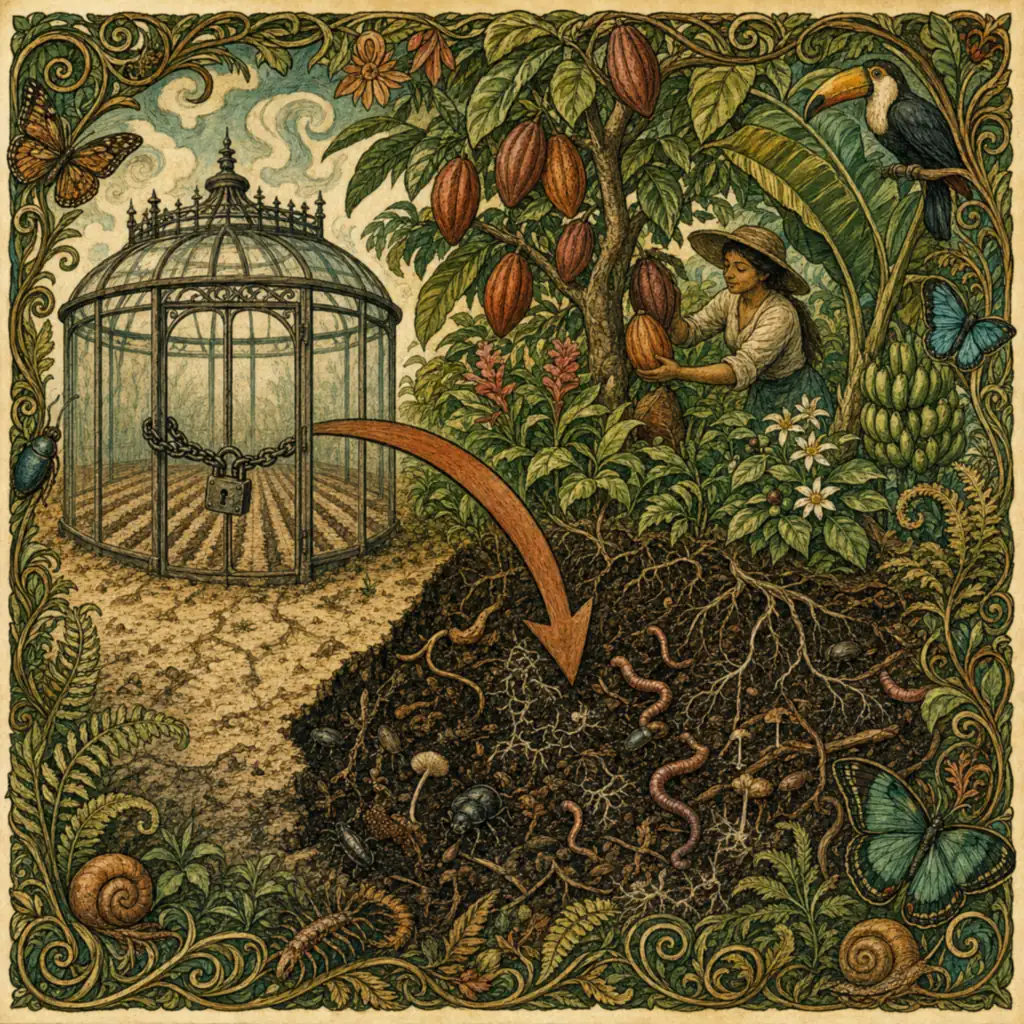
To begin this process we asked the obvious, but seldom asked, question: “What is in the product and the production process that makes all of this sustainable for generations to come?” This led us to look to culture, tradition, health, and all that we associate with the wealth of social and environmental diversity around us. Does this food item, that has been organically produced, also regenerate top soil? Does this certified organic food item promote biodiversity? Or, is it merely another product mass-produced, the same as those grown all over the world, as a result of standardisation of production with a novel marketing angle that does not really change the reality on the ground for Nature and the communities?
The important standards set in the 1960s for green and organic products were a great target and an important step forward. If we, however, want to be truly sustainable, and capable of responding to the basic needs of all while building resilience, then we need to go way beyond this simple first step eliminating the toxins like DDT and PCB. The hard bottom line question is: “Are our production methods consistent with Nature’s approach, and do they contribute to resilience, social capital and promotion of The Commons locally?” Only once we are able to answer with a resounding “yes!” to both parts of this question, will we have gone beyond organic and biodegradable. This attitude and culture of always going beyond what we know, doing better than we have done before and achieving more than we imagined possible, form the core of The Blue Economy approach.
This is why the core inspiration for The Blue Economy is Nature.