
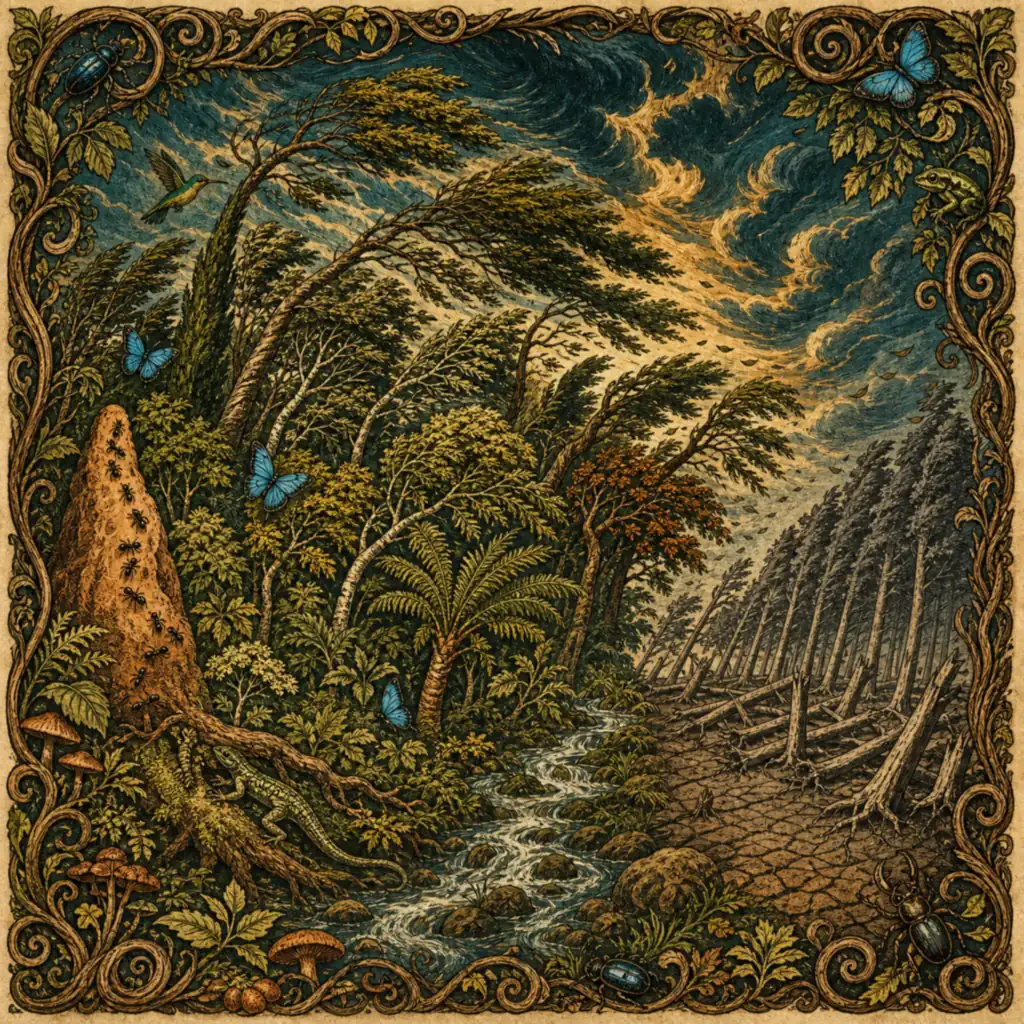
Standardisation, and the fragility it creates
The key to profit maximisation in competitive markets where economies of scale exist, is through standardisation of inputs and outputs, global sourcing and worldwide delivery systems in a tightly knit supply chain for one product, and one only. The streamlining of everything improves control, provides predictable results, and reduces uncertainties, thereby limiting risks to the business. Brands produce perfect copies of their products and services all around the world: taste and appearance, as well as performance and service are exactly the same, meeting well-defined expectations of customers at a pre-established cost, performance, and quality. McDonald’s has got this down to such a fine art, to the extent that The Economist calls its index of comparing the prices of a basket of similar goods and services across countries, the “Big Mac” index! Their approach to rigid standardisation requires tightly controlled supply chains to ensure the predictability of the product and service. While this reduces the perceived risk to the consumer, the entire set-up is very fragile. The only option is to clamp down on operations, applying a straight-jacket with little or no room to manoeuvre and influence consumer behaviour through massive advertising to avoid any change. Furthermore most, if not all, of the revenue generated, quickly leaves the local economy, missing out on opportunities for local economic development. This is perhaps the worst consequence of this model.
Natural systems operate under very different conditions
Natural systems operate under very different conditions: the basis is diversification, dependence on mainly local flows of matter, nutrients and energy, and ensuring that whatever is needed can be supplied by multiple sources from within. The system, and not only a single player, is able to supply raw materials, intermediary and finished goods and services and maintains reserves. In the case of an interruption, the system can redirect basic requirements to ensure that the ecosystem will survive. Mother trees will supply through the fungal network carbon to young offspring under stress, and pay the mushrooms with sugar. The Blue Economy approach follows the same logic. Resilience cannot be achieved through the creation of strictly regulated structures with tight checks and controls on all variables. Resilience is created through embracing diversification – in order to create a fabric of interconnected and mutually reinforcing systems.
In a Blue Economy approach we ensure, by design, that all the kingdoms of Nature are part of the cascade of matter, nutrients and energy around the local economy. While industrial systems based on The Blue Economy do not have to emulate the exact same ecological systems, the same logic applies. According to biological sciences, life on Earth consists of five distinct major families, also known as realms or kingdoms: bacteria (Monera), algae (Protista), mushrooms (Fungi), plants (Flora) and animals (Fauna). Ecosystems cycle and cascade matter, nutrients and energy through continuous flows and buffers. The more diversity of life in an ecosystem, the more effective the system becomes, and the greater its resilience. If an ecosystem relies on only a limited number of species, then the loss of a single one will affect the entire community. A strike at one manufacturing plant can stop assembly worldwide. An ecosystem thriving on a broad scope of biodiversity will be stronger in its capacity to withstand stress and will recover from adversity faster. Better still, ecosystems are on a tireless evolutionary and symbiotic path, always searching for new and better ways to live, thrive and survive. It seems that these ecosystems are made for entrepreneurs for the Common Good.
Cascading the kingdoms of Nature
An example of successfully cascading natural realms starts with growing mushrooms (fungi) on the residues produced by brewing coffee (a plant). As we will discuss in the book, the process begins with coffee residues being used as a growing substrate for mushrooms, after it has already been sterilised during the brewing process by hot water, thus saving energy. After harvesting the mushrooms, the spent substrate forms an amino acid enriched animal feed. The animal now feeds on fungi and plants and excretes a substance which is an ideal feed for bacteria, both in an aerobic and anaerobic environment. Bacteria extract even more nutrients from the animal waste. The digested material is now mineralised and becomes nutrition for micro-algae feeding on the residues left by bacteria and animals. Continued cascading, that carries on indefinitely, helps us understand ways in which farms, abattoirs and bakeries can be redesigned. It is easy to see how growth, self-sufficiency, and evolution towards resilience result in ever-increasing productivity. The efficiency in terms of energy use and provision of nutrition is a multiple of what any food supply system, even those based on the most advanced GMO technologies, can ever come close to.
This logic does not only apply to biological resources; it can also be applied to inert materials. For instance, consider recycling a glass bottle to create glass foam (using CO2 as an agent), producing a building material, or a substrate for hydroponics, or an abrasive for stripping paint from wood. Using foam glass ensures continuous creation of value, as it replaces mined material that has to be shipped around the globe. This recycled form of glass is able to eliminate the need for fire-retardants or even paint, and creates a more efficient network of production and consumption (one with the added advantage of eliminating toxic components people are exposed to during daily use). Both these production cases, inert or biological, release the power of diversity, and leave the logic of core business far behind. The business opportunities are found in the deliberate creation of more diversity.
The business opportunities are found in more diversity
Instead of focusing on one output only, and forcing everyone everywhere to cut costs and streamline supply, this offers opportunities to diversify and create much more value with locally available resources, decrease the need to maintain stock or build logistics centres, lowers risk and increases resilience. The logic of resilience through diversification relies on the capacity to embrace multiple flows of raw materials, multiple products and services, as well as multiple residues in the local economy, which are quickly reclaimed as sources of value by multiple players in the system.
These new connections build a network that is created by the continually increasing number of players and participants, inviting more entrepreneurs to be part of these positive cycles. This offers a chance to respond to many basic needs, with resources available locally, and all within the carrying capacity, substituting what is not needed (and toxic) and creating more value from what is available. This reduces risks and creates resilience — and this is what ecosystems demonstrate in their remarkable ability to create ‘something’ from what appears to be ‘nothing’.