
Aid and imports create dependency
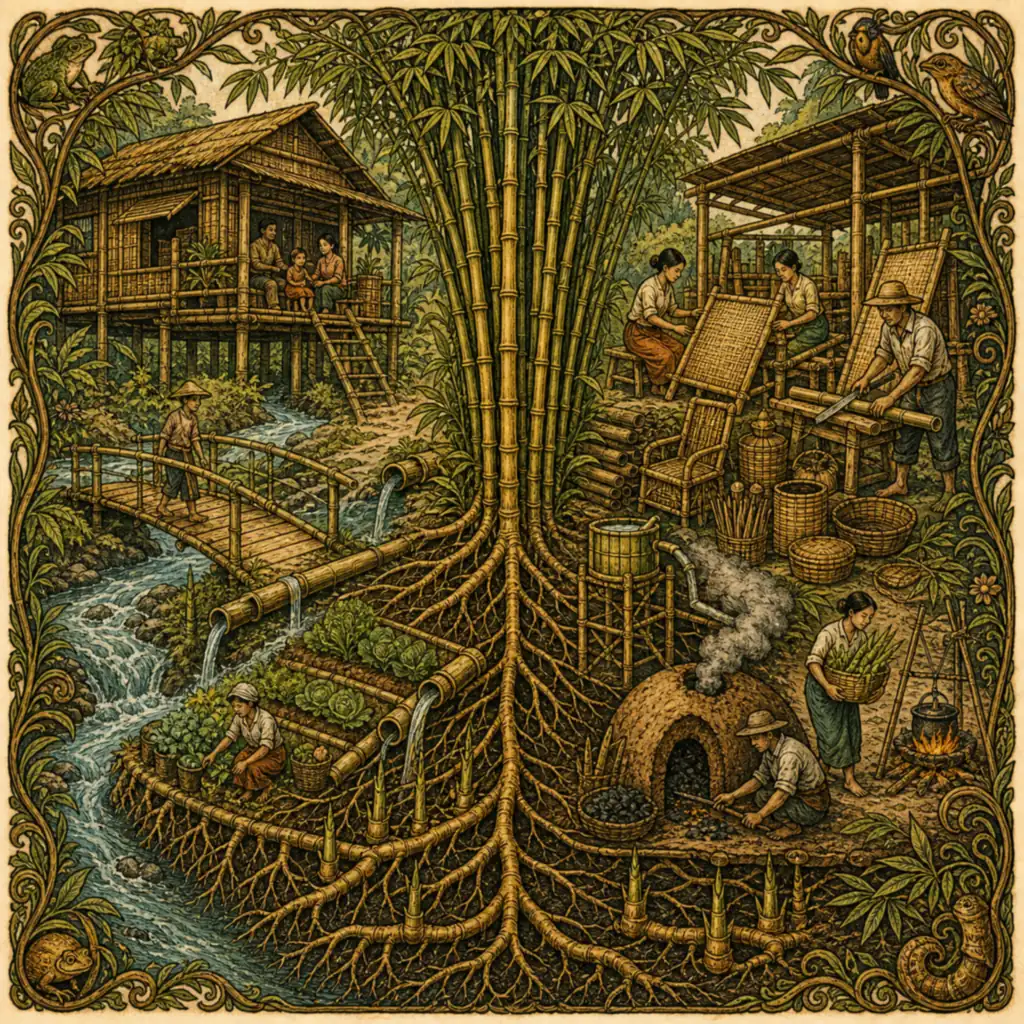
A Blue Economy approach allows the creation of portfolios of opportunities that harness existing infrastructure in multiple ways and increase labour input. The approach weaves together local materials and energy flows to transform local social, economic and environmental outcomes. Whenever problems emerge, there is typically a knee-jerk reaction to getting solutions, materials, or products from elsewhere. While this may be justified in an emergency, like after a tsunami or a cyclone hit a region, in the Blue Economy approach it is kept as the last option. Communities that are not able to respond to their most basic needs cannot be dependent on others, since aid and imports create dependency and this will never allow diversification to occur. This is not the only reason: the import of external solutions supported by the “guru effect” where an outside expert is more credible then a local wise person, renders the local communities blind to the wealth that they have locally. While many are not aware of the resources that are within reach, it is the discovery of exactly these opportunities that will help to alleviate the harsh realities of life.
Discovering all local resources, known and unknown
The Blue Economy approach focuses on the discovery of all local resources, known and unknown, appreciated and discarded. However, as we have learned over the years, it is not only the presence of a mineral, an ocean or a mountain that makes the difference, it is the opportunity to recognise the dynamic interrelations that are always offering matter, nutrients and energy that could be deployed in a continuous and sustainable manner. This process of identifying what is local and useful, builds self-confidence among the community, strengthening the belief that they have the ability to progress. If a critical mass of citizens believe that they can advance, then the society will indeed advance.
In addition, we cannot ignore the fact that whenever there is a dependency on imports, there is a need to export, or sell services to foreigners like tourism. Otherwise you have to pay cash from the reserves you have, or borrow money which needs to be repaid with interest. Furthermore, a high reliance on exports often requires the satisfaction of local needs to be subordinated to the needs of overseas customers. A country like Argentina supplies protein to 300 million consumers around the world, poverty levels skyrocketed to 57% of Argentina’s 46 million people in 2025, the highest rate in 20 years, according to a study by the Catholic University of Argentina.
Even when we are told that there is nothing
It is for these reasons that we propose a strong focus on locally available resources. Even when we are told that there is “nothing”, we pursue the search and enjoy the discovery. That is why a key exercise required of my students before they can graduate, is the design of a refugee camp where food, water, health care and housing need to be provided on a daily basis. The students initially complain that this is pushing everyone to the edge, since everyone knows that there are no resources available in such a camp. The end results have always been impressive: the discovery of the flows of nutrients, matter and energy, and soon a process unfolds whereby the students identify opportunities and the interrelations amongst all, to create a self-sufficient refugee camp, over time.
I once took a group of students to Namibia, and spent time along the Atlantic coast between Swakopmund and Henties Bay. We travelled the 120 kilometres, observing Nature, walking the salt pans, enjoying seeing the seals on the coast, the kelp washed up by the cold Benguela Current, and the abundance of lichens in the dry strip of land adjacent to the seashore. Sandwiched between the cold ocean water and the oldest hot desert on earth, estimated to have been created 17 million years ago, students had to imagine ways to produce food. The challenge is to realise that even with an untrained eye, we can quickly discover that there are many opportunities that are not at first obvious or self-evident. The sand, the permanent dew, the minerals, the temperate climate offered what is needed to farm asparagus in abundance in this narrow strip between shore and sea. Who would have imagined highly efficient asparagus farming sandwiched between cold water and hot desert?
The bread that outperforms a global business model
The production of bread offers an additional illustration how such an approach locally can outperform a global business model. Consider that in an international distribution model, a fully automated factory can produce millions of loaves per day with only around one hundred staff. Labour and raw materials represent less than 20% of the cost of the bread; other costs include marketing and distribution costs, as well as the cost of finance. The supply chain is supported by the purchase of futures, option agreements, hedging schemes, just-in-time deliveries from suppliers (which change all the time), logistic centres, and supply chain management. Global cash management supports these operations, facilitating the ongoing trade in options and futures, with flows of funds through cyberspace to facilitate deliveries, while a network of (outsourced) warehouses and logistics ensures on-time delivery.
Applying The Blue Economy approach, however, leads to a very different production model that first does all that can be done locally, with available resources. The size of the bakery shifts from one that produces millions of loaves per day to ones that produce dozens of loaves, or at most a few hundred, for local consumption. This immediately implies a different model with regard to ovens. The radius of delivery is within a few kilometre instead of thousands of kilometres. The primary market consists of the local schools, clinics and social centres, all within walking distance. This simplifies the packaging, and eliminates plastic bags and cardboard boxes, as well as the preservation agents required to prevent moulds. The logistics systems and warehouses are not necessary, and trucks will not get stuck in traffic, as no trucks are needed.
The baking oven operates on solar power, heating an oil that preserves high temperatures for days. The new power panels provide heat and electricity, enabling the bread buyers to charge their phones, and providing enough electricity to power street lights. The bread is not based on a pre-mix, but rather includes vitamins and minerals derived from the seeds and peels of locally produced sliced-and-diced fruits. Instead of a spongy bread with poor nutritional value and containing sugar-producing excessive CO2, this bread is turned into a staple food with a daily supply of vitamins and trace minerals. The value of labour and raw materials increases to nearly 50% of the value of the bread, even though the sale price is the same, and the capital costs of the bakery can be amortised within two years. The oven can operate 24 hours a day. The excess capacity of heat generation is available to dry mushrooms, to purify water, to bake pizzas or to provide warmth during a cold winter day. This portfolio of opportunities creates a sense of community, where some products and services are paid for, and some are offered for free. This is a competitive model based on diversifying output and capturing economies of scope.