
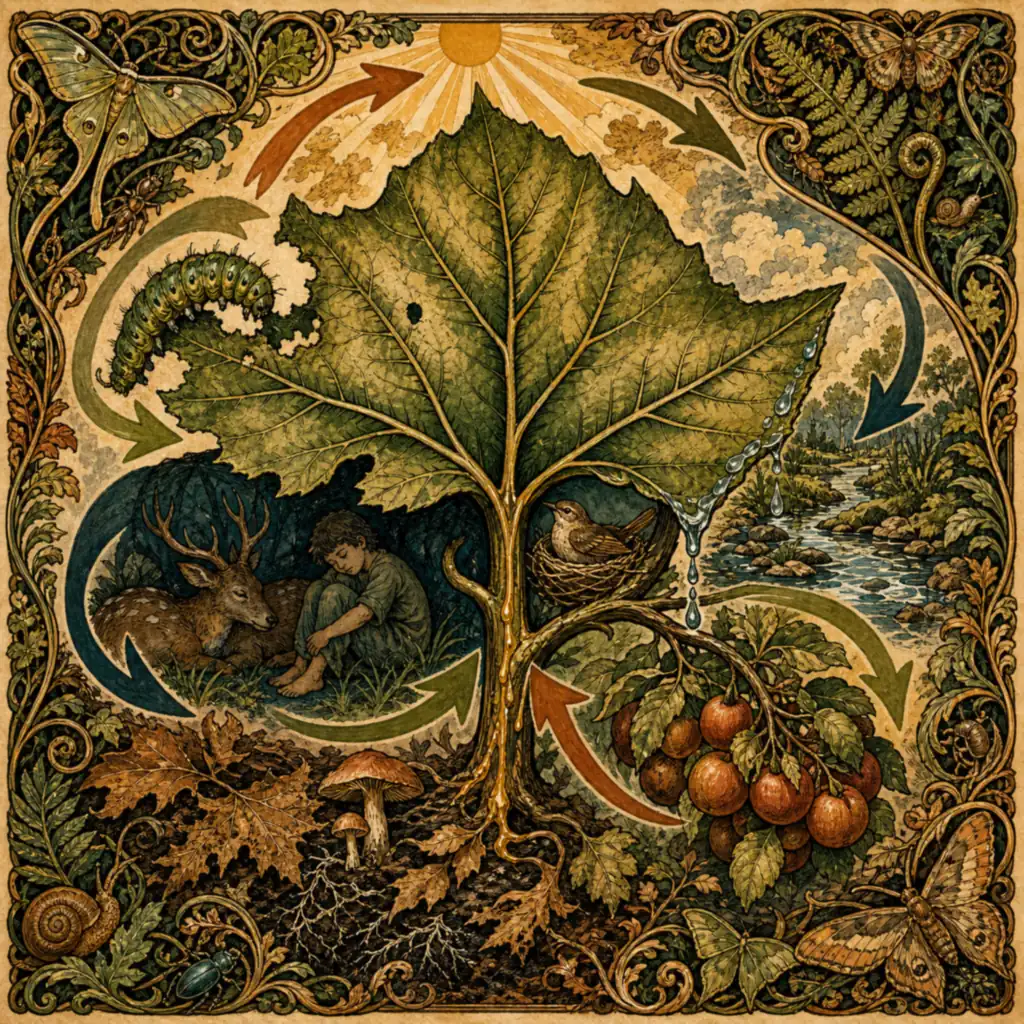
A leaf does not only capture solar energy
One of the key differences between the current dominant business model and The Blue Economy approach is that at the core of the approach is that our projects always ensure that whatever we do, there will always be multiple cash flows and multiple benefits. Just like ecosystems that never pursue just one benefit, The Blue Economy approach is designed to generate numerous financial and non-financial advantages. This approach is inspired by Nature’s brilliance, where a leaf on a tree is not only there to capture solar energy, but also to offer shade and manage trans-evaporation, prevent water loss, transport nutrients, allow gas exchanges, and protect the plant, and when it catches the wind the movement facilitates flows through its capillaries. This approach emulates these multiple actions, exchanges and advantages through the implementation of a portfolio of initiatives. As each initiative has multiple cash flows, the immediate result is an increase in revenue streams and a lowering of risk for the entrepreneurs. It also permits the generation of much more than just income – it creates the basis for communities to regain an economic and social dynamism that is in harmony with their environment. This is a key consideration, given that the prime motivation for the creation of The Blue Economy approach was to provide a business model that firstly ensures that basic needs are met and then spurs economic growth that can compete with international competition where it best serves the community.
From one waste stream, five extra cash flows
For example, when mushrooms are farmed on coffee residue, the used substrate left over after harvesting the mushrooms is an ideal organic feed for chickens, that then produce eggs. So, from one waste stream we can generate at least five extra direct cash flows, namely the revenue from 1) handling the waste from the coffee shop; 2) using it to farm mushrooms; 3) using the waste from this process as animal feed; 4) the local production of eggs; and 5) the generation of manure that can be used as a fertiliser, or in bio-digesters to make fuels. All this, while reducing the need to transport coffee waste away and bring chicken products and eggs in! Not to mention the fact that the process will avoid the methane produced by decomposing coffee waste by replacing it with CO2 generation from growing mushrooms. All of this makes the production of food cheaper and keeps it not only located in the local community but sees the revenues circulate through that community. The beauty of The Blue Economy approach is that while securing the required financial returns, we witness the unfolding of multiple benefits. As the case of mushroom growing demonstrates, along with many other applications of this Blue Economy approach, there can indeed be a range of benefits beyond the financial. Each initiative seeks to also strengthen the Commons, regenerate biodiversity, and increase the resilience of the community, which may not have direct financial outcomes but which do underpin the entire economy.
Building economic, social and natural capital
The Blue Economy approach moves beyond thinking of waste as something to be “taken care of” in a responsible manner. Furthermore, the approach does not see the merit in continuing ‘production as usual’ and then setting aside a proportion of profits to try to undo some of the damage caused, in order to demonstrate corporate social responsibility. The value of this Blue Economy approach is that it always cultivates multiple cash flows and multiple benefits from all initiatives. Building economic, social, and natural capital forms a core part of the approach. The approach looks anew at what is locally available, from that which was once thought of as a waste product or a weed, to infrastructure or assets that have been phased out and are left unproductive. In a Blue Economy, business does not relentlessly pursue short-term profit and only take responsibility for the impacts once it is forced to do so, but is capable of ensuring more income both in the short and long term, while providing multiple benefits to the community and ecosystems.